The most important channels for local marketing
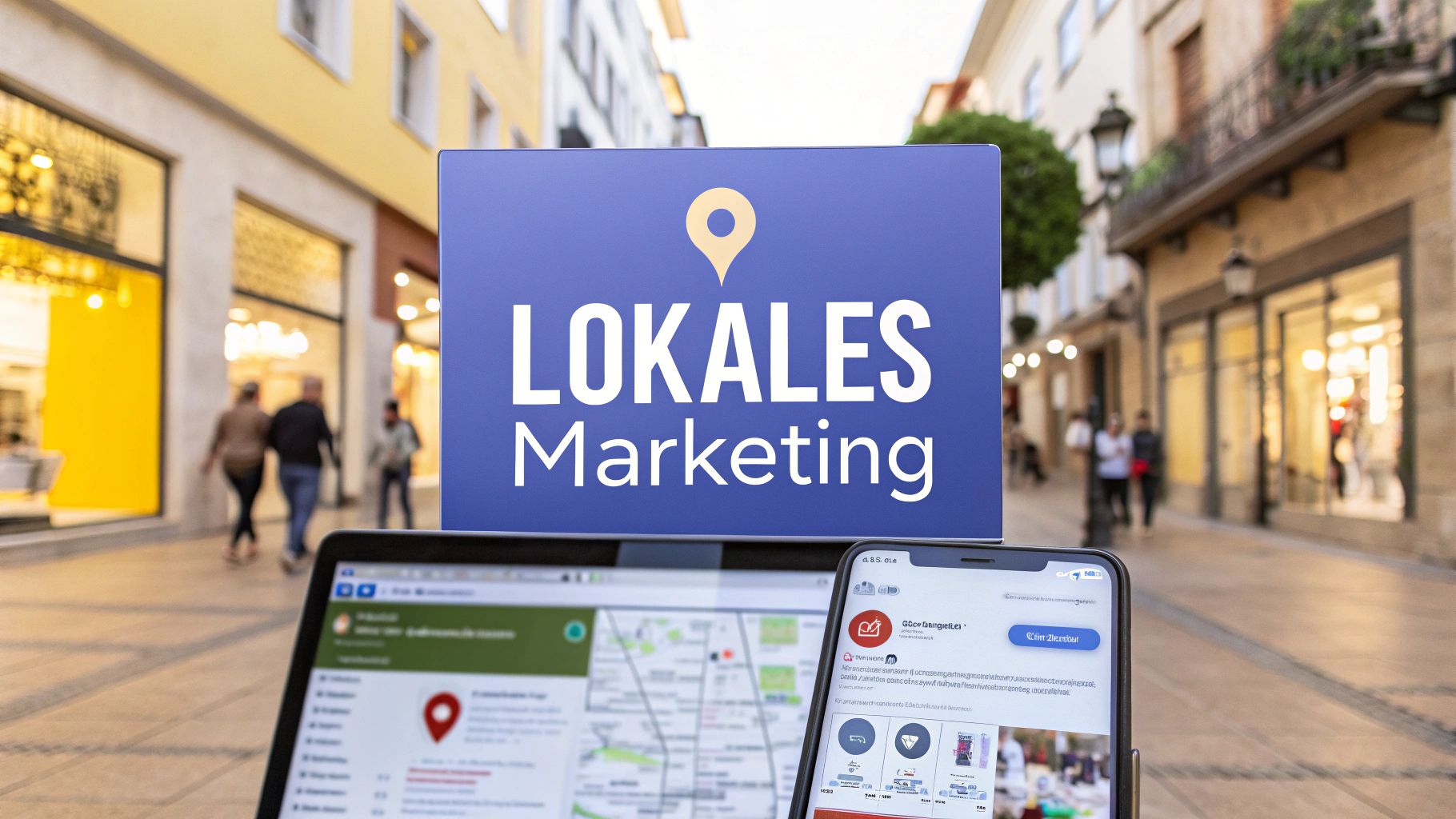
A successful strategy combines different channels that reinforce each other. Here are the key components:
1. Google Business Profile (GBP): Your digital business card
Optimizing your Google Business Profile (formerly Google My Business) is the cornerstone of any local marketing strategy. It is often the first point of contact for potential customers in Google search and Google Maps. A completely completed and actively maintained profile is crucial to appear in the coveted “Local Pack” (the top 3 map results).
- Core tasks: completeness of all data (address, opening hours), strategic choice of categories, regular contributions (Google Posts) and current photos.
- Why it's important: An optimized profile increases visibility, creates trust and immediately provides users with all relevant information.
- Practical tip: Use the post function at least once a week to share offers or news. This signals activity and relevance to Google.
For detailed optimization instructions, read our guide to Google business profiles on socialedge.ai.
2. Local search engine optimization (local SEO): The basis for visibility
While the GBP secures your presence on Google Maps, ensures Local SEO for making your own website prominently visible for location-based search queries. The aim is to send Google clear signals that your company is relevant for a specific region, e.g. for searches such as “Klempner Notdienst Berlin Mitte.”
- Core tasks: Optimizing the website for local keywords (e.g. “Zahnarzt Hamburg Eimsbüttel”), creating location-based content (landing pages for branches) and building local backlinks.
- Why it's important: Local SEO ensures that you are presented as the best local solution not only on the map but also in regular search results.
- Practical tip: Create a separate subpage for each of your locations with specific information, images, and customer reviews.
You can find more details on this topic in our article about SEO for local businesses on socialedge.ai.
3. Online reviews and reputation management: digital trust
Online reviews are the modern form of word of mouth. Reviews on platforms such as Google or industry-specific portals not only influence the purchase decision, but are also a direct ranking factor for local searches.
- Core tasks: Systematic collection of reviews, quick and professional response to any feedback (positive and negative).
- Why it's important: Positive reviews create social proof, build trust, and improve your ranking in the Local Pack.
- Practical tip: Implement a simple process to actively ask satisfied customers for a review, e.g. via email or in-store QR code.
For tools to simplify management, see our post about the best SEO app for SMEs on socialedge.ai.
4. Local content and social media marketing: Engaging the community
Local content positions you as an expert in your region. These can be blog articles about local topics, case studies from local projects, or posts on social media channels such as Facebook and Instagram.

- Core tasks: Regular publication of relevant content, use of local hashtags and interaction with the local community.
- Why it's important: You build a direct relationship with your target group, strengthen brand loyalty and demonstrate local ties.
- Practical tip: Use geo-targeting for social media ads to deliver your message to people within a defined area around your business.
For instructions on how to build a strategy, see our article on Content marketing strategy on socialedge.ai.
5. Local business listings and citations: Consistency as a signal
Local citations (“citations”) are mentions of your company on external websites, particularly in business directories. The consistency of your NAP data (name, address, telephone number) is crucial.
- Core tasks: Make sure that NAP data is exactly the same across all platforms (Google, Yelp, industry-specific portals).
- Why it's important: Consistent listings confirm to Google the legitimacy of your location and strengthen search engine trust, leading to better rankings.
- Practical tip: Review your most important entries and correct any discrepancies (e.g. “street” vs. “street”).
For more information on the relevance of directories, see our post on Business directory entries on socialedge.ai.
The interplay of online and offline channels
Effective local marketing is not limited to the digital space. The strength lies in the intelligent combination of online and offline activities, which promote and strengthen each other.
- Offline to online: A QR code on a menu or flyer takes customers directly to your Google Business Profile to leave a review. Participation in a local event is announced and promoted on social media in order to increase the number of visitors.
- Online to offline: A targeted Google ad for a special offer attracts customers directly to your retail store. An appointment booked online leads to a personal consultation on site.
This synergy creates a consistent customer experience and maximizes the reach of your marketing messages. Local sponsorship (offline), for example, often leads to a valuable backlink from the organizer website (online), which in turn strengthens your local SEO. A well-thought-out professional event planning can thus become a digital marketing booster.
Prioritization: A simple roadmap to get started
The variety of channels can be overwhelming. To get started, focus on the measures with the biggest leverage:
- Priority 1: Laying the foundation (high impact, low effort)
- Fully optimize Google Business Profiles: Fill out every field, upload high-quality photos, and choose the appropriate categories.
- Establish an evaluation process: Systematically ask satisfied customers for reviews.
- Ensure NAP consistency: Check the 5-10 most important business directories for accurate and identical data.
- Priority 2: Increase visibility (medium impact, medium effort)
- Create the foundations for local SEO: Optimize the most important pages on your website for local keywords (such as the homepage and contact page).
- Post regularly to GBP: Post offers or news 1-2 times a week.
- Maintain a social media presence: Focus on a channel that your target audience is active on and post regularly.
- Priority 3: Scale growth (high impact, higher effort)
- Create local content: Write blog articles or create landing pages that are relevant to your region.
- Build local backlinks: Look for partnerships with other local companies, associations or media.
- Show local ads: Use Google Ads or social media ads with precise geo-targeting to specifically increase your reach.
This step-by-step approach allows you to build a sustainable and effective local marketing strategy without overwhelming yourself.
Summary and next steps
Local marketing is a continuous process that combines digital presence with local roots. The most important channels — Google Business Profile, Local SEO, review management, local content and consistent business listings — work best when combined. Clear prioritization is key to success: start optimizing your GBP and collecting reviews to get visible results quickly. Build on that by optimizing your site for local searches and reaching out to your community via social media.
Looking to take your local marketing to the next level? SocialEdge specializes in getting local companies like yours into the top 3 results on Google Maps through targeted optimization. Discover on SocialEdgeHow our proven strategies can help you maximize your visibility and attract more customers from your immediate environment.