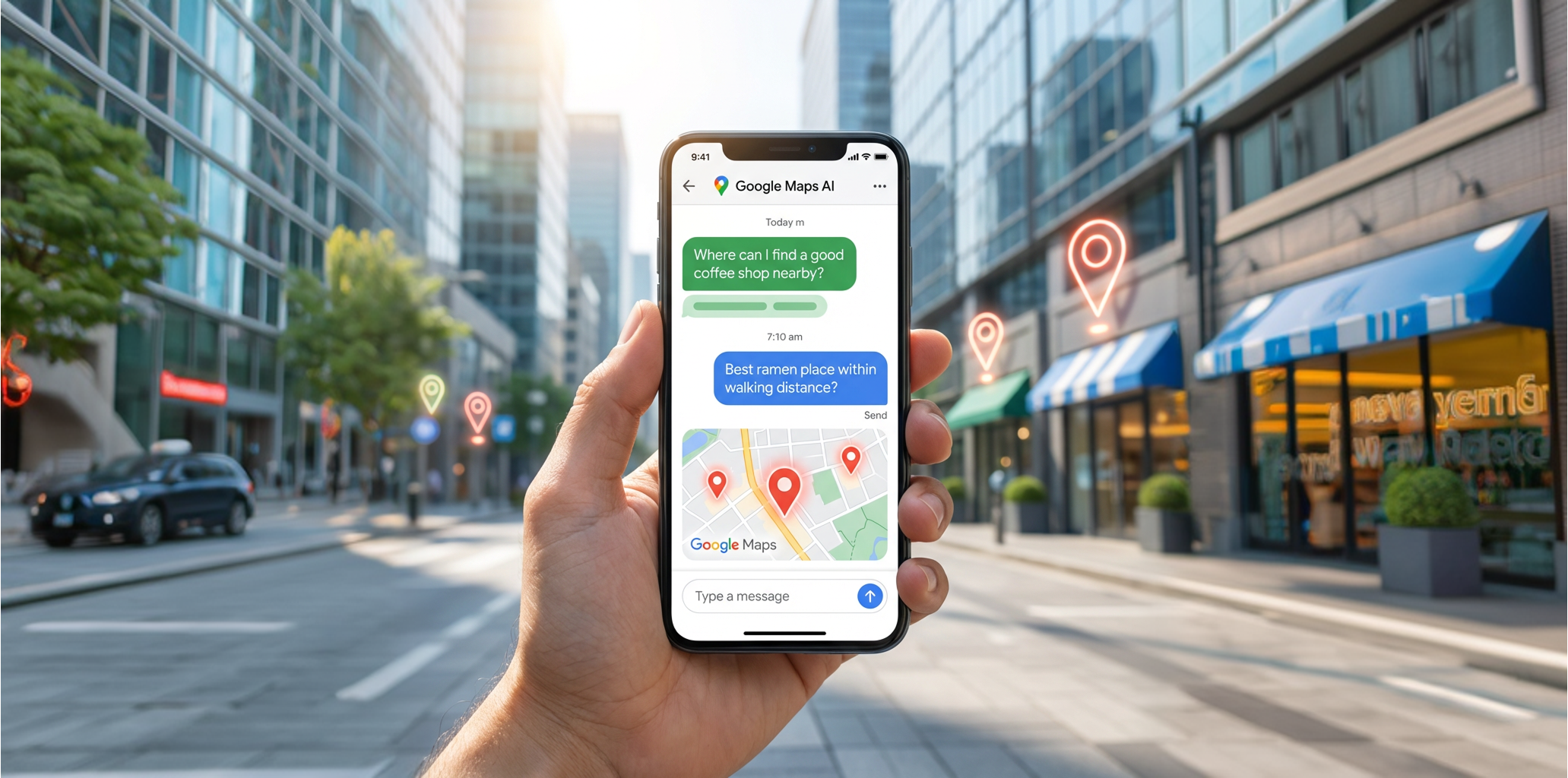
Where artificial intelligence (AI) supports the SEO process
The combination of search engine optimization and artificial intelligence is no longer a dream of the future, but a strategic necessity. The aim is not to replace human expertise, but to reinforce it through machine efficiency. The AI acts as a highly qualified assistant who performs routine tasks while the human strategist sets the direction.
Keyword research and topic finding
Every SEO strategy starts with keyword research. AI systems analyze semantic relationships between search terms and help identify entire clusters of topics instead of just listing individual keywords. They search forums, social media, and competitor websites to uncover relevant user questions and niche topics.
Instead of just asking, “What are people looking for?” , helps the AI to understand: “Why are people looking for this and what follow-up questions do they have?” This change of perspective is crucial for creating content that really helps.
Content creation and optimization
AI tools are valuable assistants when creating content, even if they don't deliver finished texts that perfectly match a brand voice. Her strengths lie in generating structured drafts, identifying content gaps compared to the competition and quickly creating texts for local purposes, such as Google Business contributions. The final preparation, enrichment with examples and ensuring authenticity remain human tasks.
Technical SEO analyses
Technical SEO is data-intensive and complex. A website can contain thousands of sub-pages, which are extremely time-consuming to manually check for errors such as broken links or slow loading times. A suitable SEO software automates many of these checks. AI systems go one step further: They analyze crawling data, recognize patterns in error messages, prioritize tasks and suggest concrete solutions. A confusing jumble of data is thus turned into a structured action plan.
Competitive analysis
Understanding competitors' success factors is a core aspect of SEO. AI automates this process by systematically analyzing top competitors for relevant keywords. She examines their content strategies, backlink profiles, and on-page optimization. This data-based analysis provides a solid basis for sharpening your own strategy and closing gaps in a targeted manner. Forecasts show that organic traffic in Germany will still be in 2025 46.98% of total website traffic will determine what underlines the importance of a strong SEO base.
Risks and limits of AI-powered SEO
The unreflected use of AI tools entails significant risks, ranging from low-quality content to ranking losses and reputation damage. A critical understanding of technological limits is therefore essential.
Superficial content and factual falsehoods
One key problem is generating superficial content. Many AI models simply aggregate and paraphrase existing top search results, resulting in generic texts without new insights or real expertise. Google is increasingly classifying such content as “unhelpful content.”
An even greater risk is so-called AI hallucinations, where AI invents facts when training data is missing. This false information is presented with the same conviction as verified facts. For companies, this can have serious consequences, from incorrect product or service descriptions to legal consequences. A manual fact-check by an expert is therefore absolutely necessary.
Accidental plagiarism and loss of brand identity
Since AI models are trained on huge amounts of Internet texts, they can unintentionally produce sentences or entire paragraphs that closely resemble existing content. Without a careful plagiarism check, there is a risk of publishing duplicate content.
An AI doesn't have a brand story. She doesn't understand the subtle sense of humor, the local dialect, or the particular tone that sets your company apart from the competition. It provides letters but not a soul.
Even with unique texts, the specific brand voice is often missing. A soulless standard text can undermine a company's credibility, particularly among local businesses that thrive on personal closeness and trust.
Dependence on the “black box”
There is a risk of blindly relying on the recommendations of AI tools without understanding the underlying strategy. Why is a specific keyword being suggested? Is a recommended structure logical for the user? Without human SEO knowledge, suggestions remain a “black box.” Anyone who relinquishes strategic control optimizes without a clear plan and risks a lack of success in the long term. The AI is the tool, not the craftsman.
Quality control as a central process step in SEO
An AI-generated text must never be published unchecked. A structured quality control process is the basis for the successful use of SEO with AI. This process serves as a strategic safety net to avoid ranking losses, image damage and legal problems.
The multi-stage E-E-A-T testing process
Google's E-E-A-T concept is at the heart of every quality control: Experience (experience), expertise (expertise), Authoritativeness (authority) and Trustworthiness (trustworthiness). An AI cannot meet these criteria on its own. A human expert must incorporate this quality in a targeted manner:
- Fact check: Every claim, figure and statement must be checked for accuracy by a subject matter expert. This is particularly essential in “Your Money or Your Life” (YMYL) topics such as medicine or finance.
- Enrich with experience: Theoretical AI texts must be enriched with concrete examples from practice, case studies or personal anecdotes in order to demonstrate lived experience.
- Make expertise visible: Superficial AI designs must be supplemented with deeper insights, critical assessments, and nuances that only an expert can provide.
An AI design is like an uncut diamond. It has potential, but it is only the precise cut by a human expert that gives it its true value and brilliance. Without this step, it remains just an inconspicuous stone.
Brand voice, plagiarism check and local relevance
After the technical examination, the adjustment to the brand takes place. A “brand voice check” ensures that the tonality, word choice and sentence structure correspond to the target group address. A subsequent plagiarism scan is mandatory to guarantee the uniqueness of the content and to avoid duplicate content.
For local companies, a final Local relevance check decisively. Local anchor points (e.g. districts), regional offers, correct NAP data (name, address, telephone) and local calls to action are integrated into the text. A systematic process, such as in a professional audit carried out by a SEO audit agency is used, ensures the quality and effectiveness of SEO measures.
Workflow recommendations for SEO and AI integration
The success lies in the integration of AI tools into structured, hybrid work processes in which people retain strategic control. The AI acts as an assistant that processes data and provides drafts, while the expert makes the final decision.
Hybrid workflow for Google business profile posts
Regular contributions to the Google company profile are essential for local companies, but time-consuming. An AI-supported workflow can increase efficiency here:
- Strategy (people): Specifying the topic (e.g. seasonal offer).
- Brainstorming (AI): Preparation of a list of specific topic suggestions.
- Prompting (human): Formulating a detailed assignment with target group, tone and call-to-action.
- Design creation (AI): Generate a raw text based on the briefing.
- Quality control (human): Check the facts, adjust the tonality, add local details and select a suitable image before publishing.
This process combines the speed of AI with strategic and qualitative leadership by humans.
Optimizing service pages through AI analysis
To optimize important service pages, AI can be used as an analysis assistant to decipher the structure of successful competitor sites.
The biggest advantage of AI is its ability to analyze huge amounts of data in the blink of an eye. It can screen the top 10 competitors for a service in seconds and uncover patterns that would perhaps be lost if researched manually.
The workflow is as follows:
- Analysis order: The AI analyses the websites of the top 5 competitors for a specific service (e.g. “Hair removal laser Cologne”).
- Structural proposal: The AI creates a summary structure that shows common subtopics and FAQs from competitors.
- Interpretation and implementation (human): The expert uses this construction plan as a basis, develops a superior structure, integrates unique selling points and adds his own expertise.
This method helps fill gaps in content and ensures that the page covers all relevant aspects. Technical optimization can be carried out by a specialized SEO optimization software be supported.
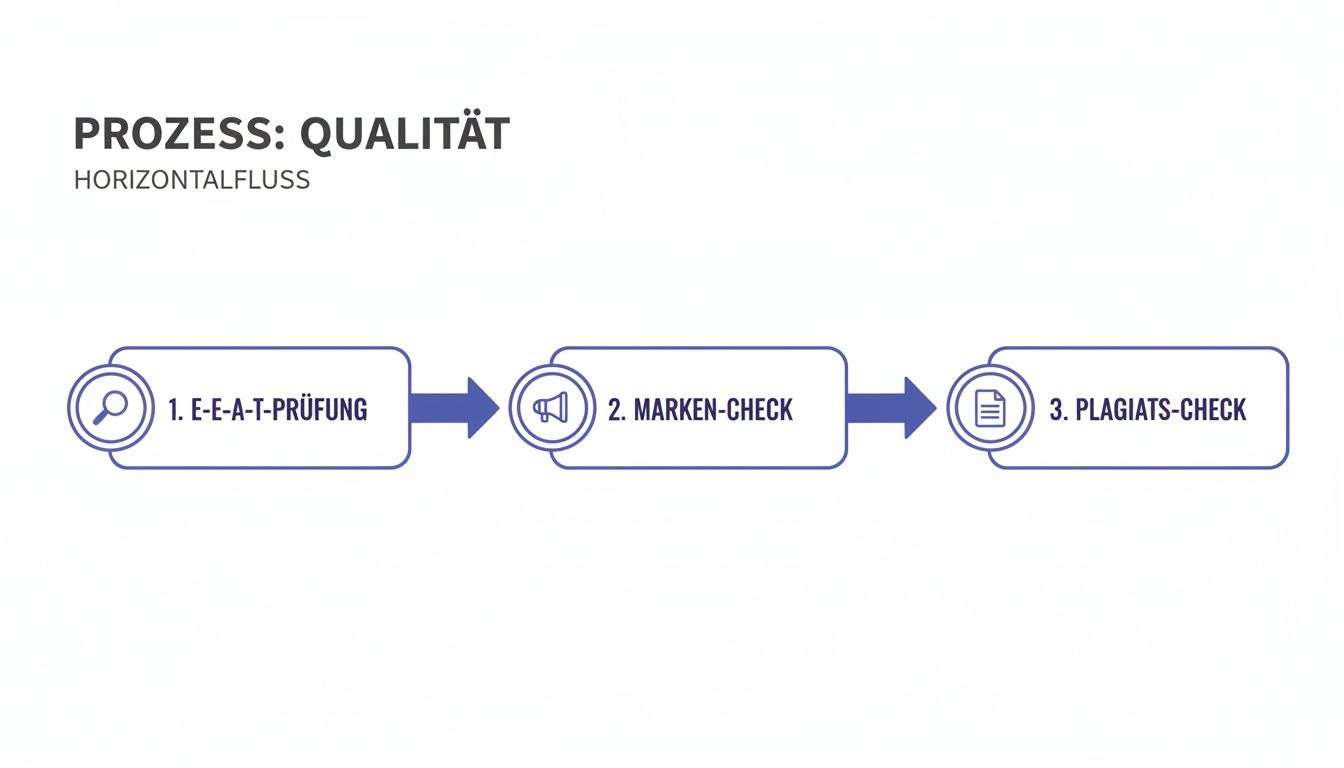
The graphic makes it clear: AI-based text creation must be followed by a multi-stage human review that ensures technical accuracy (E-E-A-T), brand consistency and originality.
Summary and recommended action
The use of AI in search engine optimization is an established practice. The technology acts as an efficient assistant that speeds up data-intensive and repetitive tasks. However, strategic thinking, creativity and final quality control remain irreplaceable human skills. The risks, such as factual inaccuracies and loss of brand identity, are real and require clearly defined audit processes. A hybrid approach, in which human expertise controls and refines machine efficiency, is crucial for success.
Review your current SEO processes and identify areas where AI can help improve efficiency as a supporting tool without relinquishing qualitative control.
Would you like to know how a specialist SEO app Can help you strategically improve your local visibility? Then get in touch now and get advice.
SEO and AI FAQs
Here we clear up the most common questions and myths about artificial intelligence in everyday SEO. The answers should help you correctly assess the tools and use them wisely for yourself.
Can Google recognize AI-generated content and punish it for it?
The simple answer: Google evaluates the result, not the way there. Whether a text is written by a human or an AI is secondary. What counts is quality.
As long as your content is useful, unique, and trustworthy and the well-known E-E-A-T criteria (experience, expertise, authority, trust), you are on the safe side. You can only be punished if you publish low-quality, mass-produced spam content — no matter who or what created it.
What are the best tools to get started?
To get a feel for the matter, all-rounders such as ChatGPT or Gemini A great starting point. They help to collect initial ideas or draft raw texts.
If you want to go deeper, specialized platforms like SurferSEO or MarketMuse more targeted content optimization features. But remember: The best tool is useless without a clear process. The decisive factor is how you use it and how thorough the human quality control is at the end.
Will AI soon replace the human SEO expert?
No, but it fundamentally changes his role. The job of SEO manager will not be superfluous, it will continue to develop. Repetitive tasks are eliminated, but other skills come to the fore.
The future of the SEO expert lies in strategy, creative problem solving and human intuition. He becomes a conductor who uses AI as a powerful tool, interprets the results and ensures the final quality that a machine can never achieve.
Is all the effort also worthwhile for small, local companies?
Definitely! Especially for small companies with limited budgets and personnel, AI in SEO A real game changer. It is suddenly possible to regularly create high-quality content for the Google company profile even without a large marketing department.
Analyzing local search queries or looking at the competition — tasks that used to take hours — can now be done much faster. This leaves more time for the essentials, while visibility on site increases noticeably.
Do you want to finally be at the top of local search and Google Maps without having to familiarise yourself with the depths of AI? SocialEdge is your partner who combines proven SEO strategies with clever, AI-supported processes. We'll get you to the top of your local search results.
Discover how we can help your business grow and generate new customer inquiries: Learn more about SocialEdge