What is local search engine optimization?

Local search engine optimization (local SEO) comprises all measures aimed at making a company easier to find for search queries with a local connection (e.g. “Friseur Berlin Mitte” or “Restaurant near me”). It is focused on providing relevant results to users located in a specific geographical region.
The difference to classic SEO
The fundamental difference between local and classic SEO lies in the geographical focus.
- Classic SEO aims for supra-regional or even global visibility. It is relevant for online shops or companies whose customer location is irrelevant. For example, a keyword here would be “buy running shoes.”
- Local SEO focuses on a clearly defined catchment area. It is crucial for companies with a physical location, such as shops, restaurants, medical practices or craft businesses. A typical keyword here would be “buy running shoes in Hamburg.”
While classic SEO primarily evaluates the authority of a website across the web, local SEO also weights factors such as the company's physical proximity to the searcher and local relevance signals.
How Google ranks local results: Maps vs. organic search
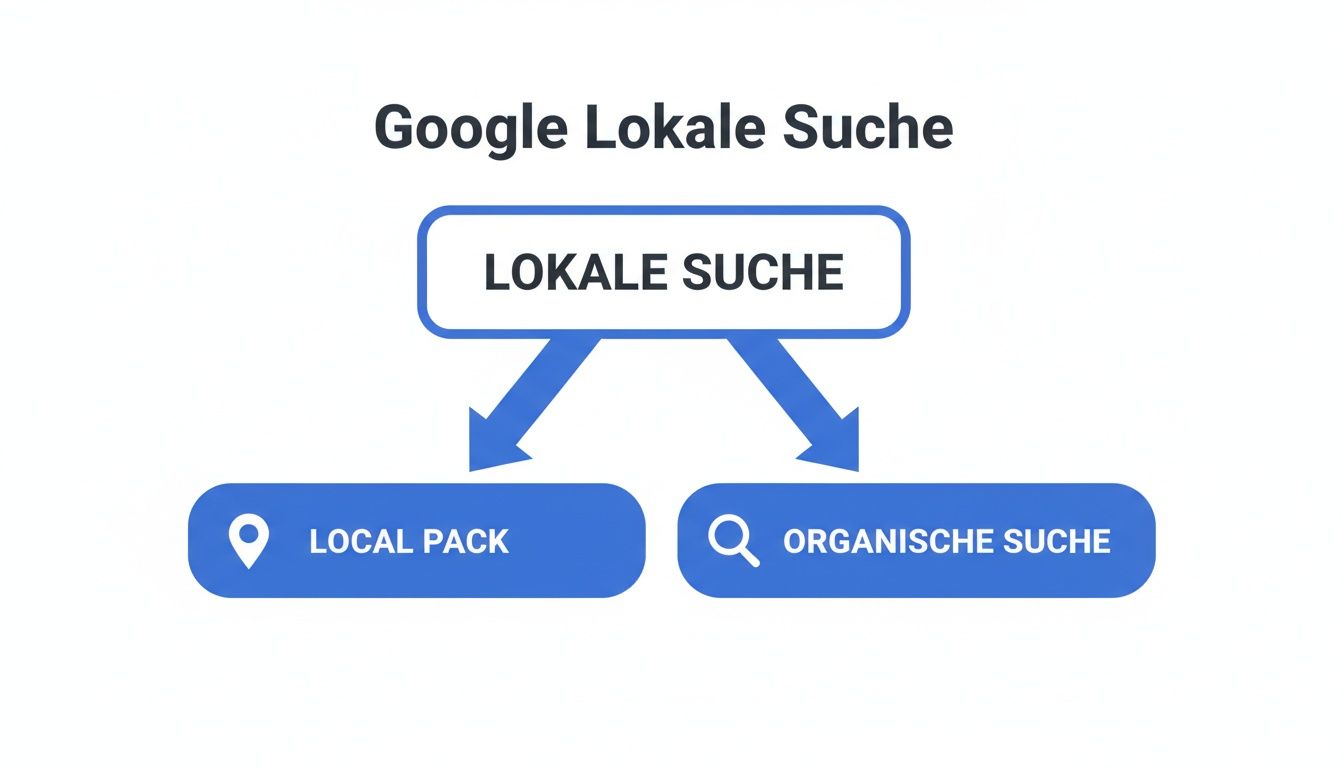
Google presents local search results in two different formats based on different ranking algorithms: the Local Pack (Google Maps results) and organic local search results. Effective local search engine optimization must take both areas into account.
The Local Pack (Google Maps results)
The Local Pack is the prominently placed block with three to four map entries that appears above the organic results when searching with local intent. The placement here is decisively determined by three factors:
- Relevance: How well does the information in the Google company profile match the search query?
- Distance: How far is the company from the searcher's location?
- Prominence: How well-known is the company? This is assessed based on factors such as the number and quality of reviews, local backlinks, and overall online authority.
The primary data source for the Local Pack is the Google Business Profile.
Organic local search results
The classic organic search results follow below the local pack. This list of blue links is also influenced by the user's location, but traditional SEO factors play a bigger role here. The ranking is heavily influenced by the quality and content of the company website itself, including on-page optimization, technical SEO, and the quality of the backlink profile.
The 7 most important local ranking factors
In order to be successful in local searches, specific ranking factors must be optimized. These signals help Google assess a company's relevance and authority for a local search query.
1. Google Business Profile
The Google Business Profile (formerly Google My Business) is the central ranking factor for the Local Pack. A completely and precisely completed profile is the basis. The correct main category, complete information on opening hours, services and attributes, and regular activity through contributions and uploading current photos are decisive. For detailed instructions, see our guide to Google My Business optimization.
2. NAP consistency
NAP stands for Name, Address, Phone Number. The exact match of this data on your own website, in the Google Business Profile and in all relevant online directories is a strong sign of trust for Google. Inconsistencies can confuse the algorithm and have a negative impact on the ranking.
3. Customer ratings (reviews)
The number, average rating and timeliness of customer reviews are a significant ranking factor. They signal to Google the popularity and quality of a company. Interaction with reviewers is just as important: Responding to positive and negative reviews shows commitment and customer proximity.
4. On-page optimization
Your own website must send clear local signals. This includes the integration of place names into titles, headings and texts (e.g. “Tax Advisor in Cologne-Ehrenfeld”) and the use of structured data (Schema.org) for “LocalBusiness” markup to make address and opening hours machine-readable. This helps to target customers who, for example A perfect apartment in Hannover List search.
5. Local backlinks
Backlinks from other relevant, local websites are particularly valuable for local SEO. Links from city portals, local industry associations, news websites or neighboring companies signal to Google a strong foothold in the region and increase local authority.
6. Proximity
The physical distance of the company from the searcher's location is a dominant ranking factor, particularly for searches with the addition “near me.” This factor cannot be directly influenced, but precise address information in the Google Business Profile ensures that Google can correctly assign the location.
7. User behavior
Signals such as the click rate (CTR) on the search entry, the number of calls via the company profile or the frequency of route planning show Google the interest of users. An entry that is clicked on frequently and leads to interactions is rated as more relevant and tends to be preferred in the ranking.
Common mistakes in local SEO and their impact
Certain mistakes can undermine local search engine optimization efforts and result in poorer rankings.
- Inconsistent NAP data: Different spellings of company names, addresses or telephone numbers on different platforms create mistrust among search engines. Google can't clearly determine which information is correct, which weakens the authority of the entry. To learn more about the importance of consistent entries, you can contact Inform industry directories in our article.
- Wrong or too general categories in Google Business Profile: Choosing an inappropriate main category (e.g. “service provider” instead of “electrician”) prevents the profile from being displayed for relevant search queries. It is essential to choose the most specific category for the core business.
- Ignoring customer reviews: Failure to respond to reviews, particularly negative ones, signals a lack of customer interest. This not only damages the corporate image, but is also seen by Google as a negative signal of prominence and trustworthiness.
Practical checklist for local search engine optimization
This checklist summarizes the most important action steps to improve local visibility.
- Claim and verify Google Business Profiles: Make sure you have full control over your profile. Here you can find out how to create a Create a Google business profile.
- Complete all profile information in full: Each field (services, products, attributes, description) should be completed precisely.
- Select the most specific main category: Add all relevant secondary categories to them.
- Upload high-quality photos: Show off your business, team, and products.
- Check NAP data for consistency: Check your website, Google profile, and important directories for exact matches.
- Use local keywords on the website: Integrate place and district names with page titles, headlines, and content.
- Implement schema.org markup for LocalBusiness: Make your business data easy for search engines to understand.
- Establish a process for collecting reviews: Actively ask satisfied customers for feedback.
- Respond to all reviews promptly: Interact professionally with positive and negative feedback
- Research options for local backlinks: Identify local partners, associations, or media for potential links.
Summary and next steps
Local search engine optimization is a continuous process based on precise Google Business Profile maintenance, consistency of company data, and building local authority. By systematically implementing the above ranking factors and avoiding typical mistakes, local companies can significantly increase their visibility for relevant customers in their area. This checklist provides a specific roadmap for getting started.
Would you like to systematically improve your local visibility and secure a decisive competitive advantage? SocialEdge is your specialized partner for Google Maps marketing. We'll get you into the top 3 local search without an advertising budget. Discover now how we can take your company to the top.