What is classic SEO? Reach without limits
Classic SEO, often referred to as traditional or national SEO, aims to optimize a website for a wide audience, without geographical restrictions. The goal is not a quick visit to the shop around the corner, but to build up brand recognition and thematic authority on a national or international level over the long term.
In essence, it is about being found in search queries that satisfy a need for information but have no direct local connection. Examples include searches for “tax return instructions” or “best vegetarian recipes.” Here, the focus is on knowledge, not on location.
What is local SEO? Attract customers from the neighborhood
Local SEO is a highly specialized strategy with a clear goal: to make your company visible exactly where it counts most — in local search results. This is about reaching people who are in your immediate vicinity and often have a specific intention to buy.
Think of searches such as “automotive repair shop near me” or “best Italian Hamburg.” Anyone who searches in this way not only wants information, but also a quick solution for an acute need. Local SEO positions your company as the best answer to these inquiries, what a successful local marketing is essential.

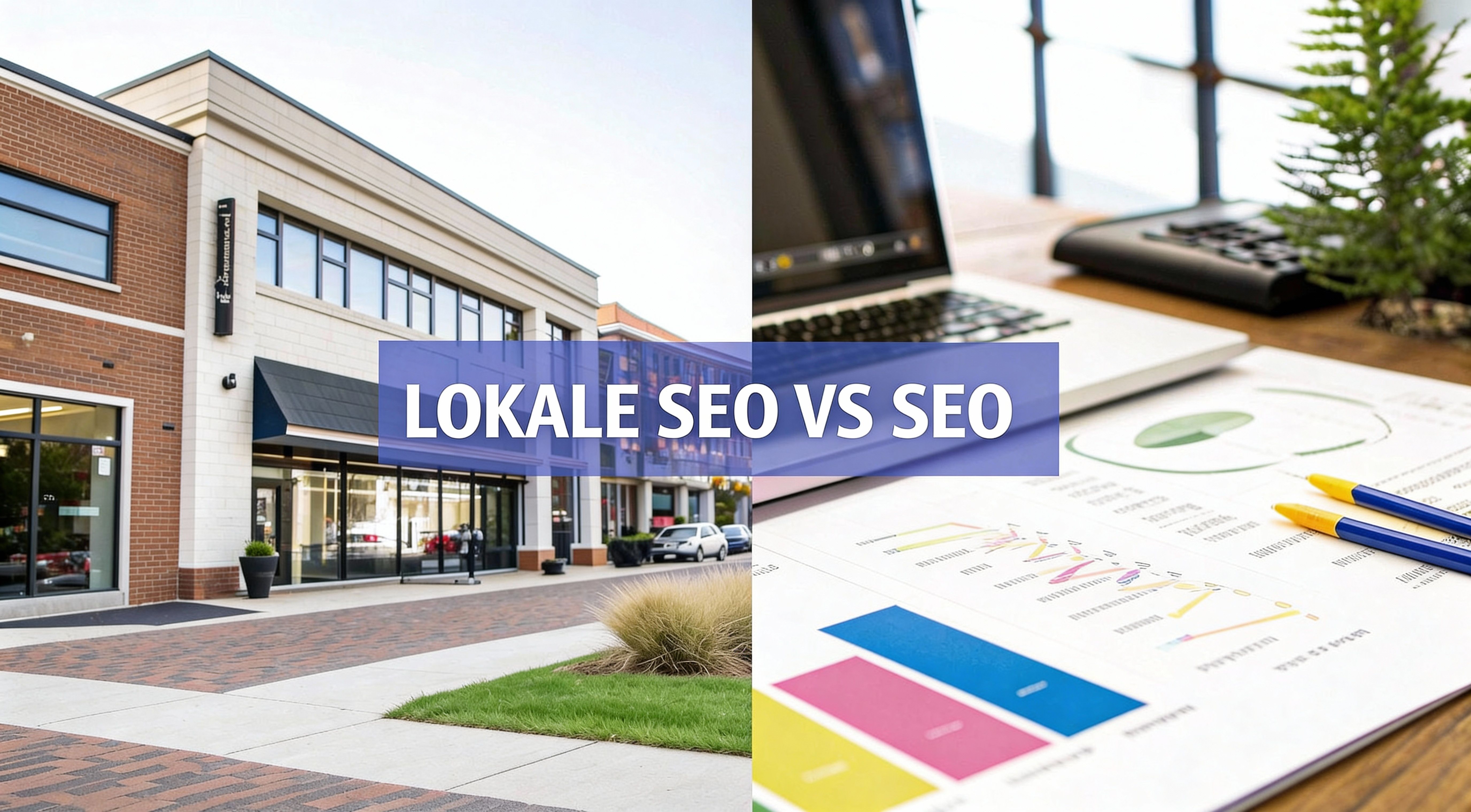
The comparison: Local SEO vs. SEO in detail
In order to choose the right strategy, the differences in the key areas must be understood. The path to visibility is fundamentally different, depending on whether you are addressing local or supra-regional customers.
Search intent: What does the user really want?
- Local SEO: The intention is usually transactional and localized. The user is looking for an immediate, practical solution near them (e.g. an address, a telephone number). The search is aimed at action in the real world.
- Classic SEO: The intent is often informational. The user wants to find out more, understand topics or compare options (e.g. through blog articles, instructions). The action primarily takes place online.
Ranking factors: What does Google pay attention to?
Google evaluates local and supra-regional searches according to different criteria.
For local SEO, the following are decisive:
- Google Business Profile (GBP): The completeness, accuracy, and activity of the profile is the most important factor.
- Proximity: The physical distance between the seeker and the company.
- Relevance & prominence: Appropriate categories, positive reviews and local business listings (citations).
Classic SEO includes:
- Domain authority: The trust built up by a website, reinforced by high-quality content.
- Quality of backlinks: References from thematically relevant, trustworthy websites.
- Technical SEO & content depth: A clean page architecture, fast load times, and comprehensive, well-researched content.
The different factors also require different tools. For local companies, a targeted Local rank tracking essential to measure visibility in the Google Maps Pack, while for supra-regional destinations, the general Placement in search results is in focus.
Content types: Which content works?
- Local SEO: The focus is on action-oriented information. Important formats are Location pages with address and opening times, short Google business profile posts and user-generated content such as customer reviews. An optimally maintained profile, as described in the instructions for Create a Google business profile Described, here is the basis.
- Classic SEO: This requires more complex formats that demonstrate expertise. This includes in-depth Blog articles, guides, white papers, and case studies, which answer complex questions and attract a wide audience.
Business goals: What should be achieved in the end?
- Local SEO: The goal is direct customer actions in the real world: calls about the GBP, directions and more walk-in customers in the shop.
- Classic SEO: The goals are wider and more digital: Development of brand recognition, generating leads via the website, increasing online sales and establishing yourself as an opinion leader in a niche. The overall goal is to create new Attract customers to be able to, regardless of their location.
Areas of application: When is which strategy the right one?
Choosing the right SEO strategy depends directly on your business model.
When is local SEO required?
Local SEO is the foundation for any business that serves customers in a physical location or offers services in a limited geographical area.
- examples: Restaurants, cafés, hotels, stationary retailers (fashion stores, bookstores), local service providers (hairdressers, craftsmen, doctors, lawyers).
- Rule of thumb: When the question “Where can I find you?” is crucial for your customers, local SEO is essential.
When is classic SEO enough?
If your customer base knows no geographical borders and your offer reaches customers digitally or by mail, the focus is on classic SEO.
- examples: e-commerce stores, SaaS companies, digital agencies, information portals and blogs.
- Rule of thumb: If your business isn't tied to a physical location, focus on building supra-regional authority.
Synergies: How local SEO and classic SEO work together
The question is rarely “either/or.” The best results are achieved when both strategies are combined intelligently. Strong supra-regional authority (classic SEO) can underpin local trust (local SEO) and vice versa.
For example, a specialist lawyer can strengthen his domain authority through relevant professional articles throughout Germany, which has a positive effect on his local rankings. At the same time, strong local valuations serve as a sign of trust if he wants to expand nationally. This creates a positive interaction that strengthens the entire online presence. This approach is a core part of modern SEO for local businesses.

Decision-making aid for companies
Choosing between local SEO and classic SEO is one of the most fundamental strategic decisions for your online visibility.
Summary:
- Local SEO is essential for companies with a physical location or regional service area. It is aimed at immediate, local customer actions, such as phone calls or shop visits. The focus is on Google Business Profiles, reviews and local relevance.
- Classic SEO is aimed at companies without geographical restrictions, such as e-commerce shops or SaaS providers. In the long term, it builds supra-regional brand authority through high-quality content and backlinks.
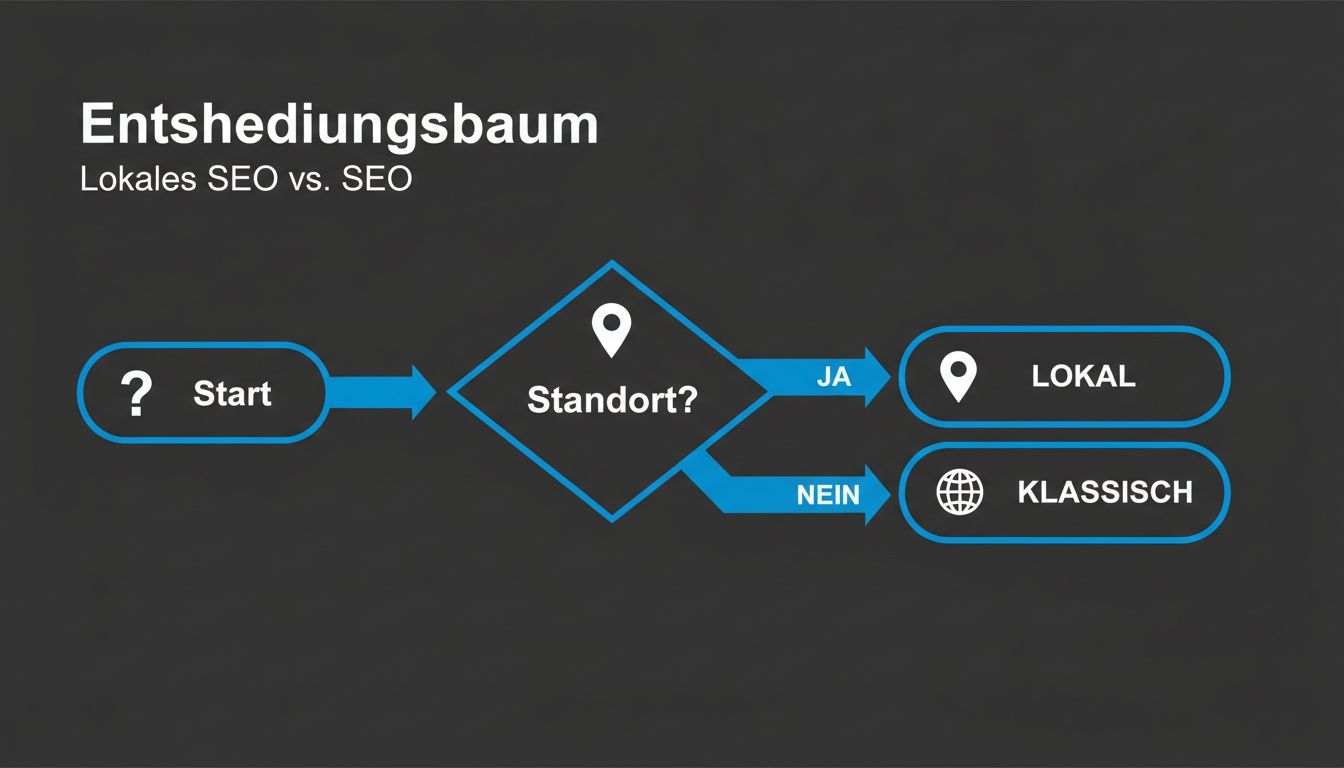
Your choice:Ask yourself a question: “Is the physical location of my company critical for my customers?”
- Yes? Then local SEO is an absolute priority.
- No? Then focus on classic SEO.
In many cases, an intelligent combination of both approaches is the key to maximum growth. Start where the biggest lever is for your business and gradually expand your strategy.
Would you like to be at the top of the Google Maps Pack and continuously attract inquiries from your region? SocialEdge is your specialized partner for dominant Google Maps marketing. With our exclusive support per sector and postal code area, we ensure that you become the first choice for local customers.