Why Google Maps optimization is important for local businesses
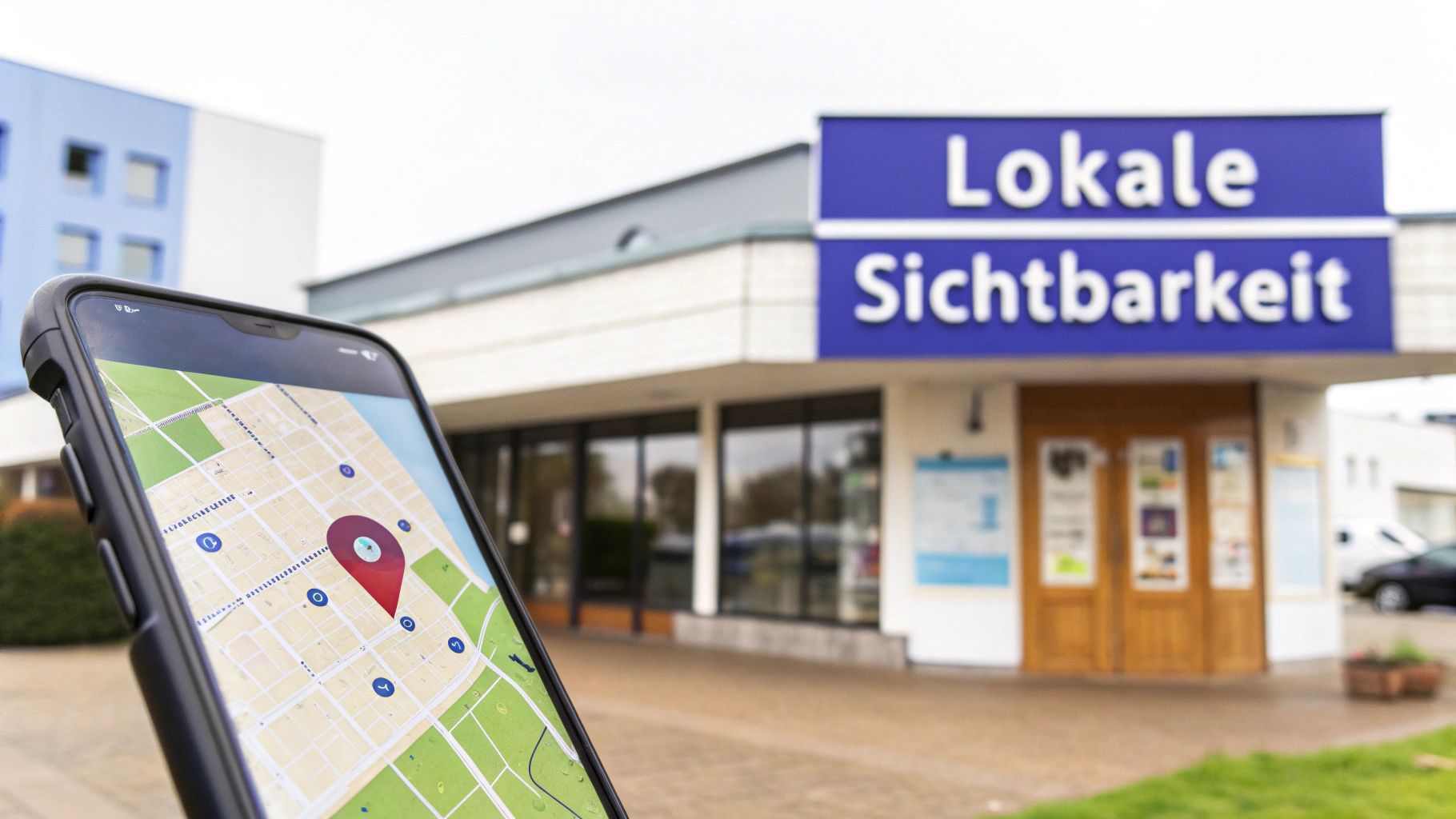
Google Maps is a central tool for local businesses to acquire customers. Search behavior has fundamentally changed: Instead of general searches such as “craftsmen,” users now enter specific queries such as “heating installer near me” or “best café in Bühl” into their smartphones.
Google responds to such requests with the “Local Pack,” a highlighted box with three map results above the organic search results. This positioning is of great value to every local business.
Changing search habits as an opportunity for local providers
The time for industry books is over. Today, the search for services and products is mostly spontaneous and location-based. Anyone looking for “auto repair shop emergency service” needs an immediate solution. Companies that are not visible on Google Maps at this moment are barely noticed by this potential customer.
A well-optimized profile functions as a sales channel that can generate qualified inquiries around the clock without having to pay for every click.
Strategic optimization for Google Maps aims to be present exactly when a potential customer signals a clear purchase intent. A carefully maintained profile ensures that your company appears as a relevant and trustworthy option.
The importance of Google Local Pack
The places in the Local Pack are sought after, as data shows that when making local searches, a significant proportion of users click directly on one of the three results in the Google Maps Pack. It is estimated that this share is over 40%. If your company doesn't appear there, this customer is highly likely to join the competition.
An example of a craft business in Bühl: An optimized profile with clearly defined services, positive reviews and current photos can lead to measurable results:
- More calls: The telephone number is visible at a glance.
- More route inquiries: Interested parties can be shown the way with just one click.
- Higher turnover: More inquiries and walk-in customers can improve the order situation.
It is crucial that your company is involved in searches such as Fitness nearby is well positioned. Whether it's a hair salon or a law firm — every local business that dispenses with sophisticated Google Maps optimization leaves potential customers to the competition.
For more information on local search engine optimization, see our comprehensive guide to local SEO.
The most important ranking factors for Google Maps
In order to understand what is important, the decisive factors for the ranking in the “Maps Pack” are summarized here. The table shows what Google values and what effort should be planned for implementation.
.tbl-scroll {contain:inline-size; overflow-x:auto; -webkit-overflow-scrolling:touch} .tbl-scroll table {min-width:600px; width: 100%; border-collapse:collapse; margin-bottom:20px} .tbl-scroll th {border:1px solid #ddd; padding:8px; text-align:left; background-color: #f2f2f2; white-space:nowrap} .tbl-scroll td {border:1px solid #ddd; padding:8px; text-align:left} ranking factorImportance for Google effort for implementationGoogle business profile optimizationVery high mediumOnline reviews (number, frequency, quality)Very high runningNAP consistency (name, address, phone number)HighLow to mediumOn-page SEO (keywords, location pages)HochMittelLocal backlinks & quotesHighHochuser behavior (clicks, calls, routes)Medium-running (indirect)Google postsMediumLow (ongoing)Photos & videos (quality, timeliness)MediumLow (ongoing)
This overview shows that a good ranking is the result of continuous and strategic work. The effort is an investment in visibility that can pay off through new customer contacts.
Laying the groundwork for your local ranking

A good ranking on Google Maps requires a well-thought-out strategy that starts with the basics. Before aspects such as photos, posts, or reviews are optimized, the basic information in your Google business profile must be complete and accurate.
This data is the first source of information for Google to understand which services you offer and which audience you're relevant to. Many companies underestimate this point and lose visibility to competitors as a result.
A solid foundation is the prerequisite for further measures taken by Google Maps optimization be able to have their full effect.
The right categories as a guide for Google
Choosing the main category is one of the most important decisions for your profile. It signals your primary line of business to Google. A category that is too general can generate inappropriate inquiries while remaining invisible to your actual target customers.
The secondary categories allow you to further specify your offer. They provide Google with valuable information about your entire range of services.
Case Study: A Law Firm
- Less optimal: A law firm chooses “lawyer” as the main category and “legal advice” as a secondary category. This information is very unspecific and competition is high.
- Better: A specialized law firm chooses “labor law specialist” as the main category. As secondary categories, it specifically supplements “lawyer for protection against dismissal” and “lawyer for contract law.”
This precise selection increases the likelihood of being found in search queries such as “lawyer termination severance payment” and attracting suitable clients.
Use keywords specifically in the company description
The company description offers on 750 characters Space to meaningfully integrate important keywords and explain your offer. Simply stringing keywords together should be avoided. Instead, describe what makes your company stand out, what problems you solve for your customers, and in which regions or districts you operate. Mentioning local reference points can strengthen regional relevance.
Your company description should include the terms you want to be found under. However, write the text for people, not for search engines. Authenticity and clear information convince both customers and Google.
The importance of NAP consistency
Inconsistent master data can have a negative impact on local rankings. NAP stands for Name, address, telephone number (Name, Address, Phone). These three core pieces of information should be the same on all platforms on which your company is listed.
- Name: Always use the exact company name, including the legal form (e.g. “Malerbetrieb Müller GmbH” instead of “Malermeister Müller”).
- address: Pay attention to a uniform spelling (e.g. “Hauptstr. 10” vs. “Hauptstraße 10”).
- telephone number: The format should be consistent, including in terms of country code and spaces.
Google compares your data with listings in other online directories. Any discrepancy can affect the credibility of your information and weaken your ranking. Your NAP data acts as your organization's digital fingerprint—it should be the same everywhere.
If you need help setting it up, check out our article for instructions on how to set up a Create a Google business profile. Take the time to build this foundation carefully and consistently, as it is the basis for your future local visibility.
Impress with professional photos and videos

Visual content is an essential part of Google Maps optimization. When searching locally, the first visual impression can be decisive for whether a potential customer makes contact or switches to a competitor.
High-quality, authentic photos and videos can build trust and provide insight into your business. A profile without pictures or with blurred images often looks less professional and tends to be paid less attention to by users.
Which pictures belong in your profile
Google prefers company profiles with a diverse selection of images. Focus on these areas to give searchers a comprehensive picture:
- Outdoor shots: Photograph your store from outside from different angles and at different times of day. This helps customers find you easily.
- Interior photos: Show off your premises such as retail spaces, workshops or waiting areas to create an inviting atmosphere.
- Team photos: Pictures of you and your employees make your company approachable and personal.
- Products & services at work: Showcase what you're offering. Show off your products in use or the results of your work, such as before and after photos at a hairdresser or pictures of a completed construction site at a craftsman.
For example, a restaurant can positively influence the click rate on the “Reserve” button with professional photos of food, the ambiance and the service staff. Each of these visual stimuli can lead to Conversion rate optimization contribute.
Technical aspects of image optimization
Preparing image files before uploading them can further exploit SEO potential. Two often overlooked details are relevant here.
The filename should be descriptive. Instead of IMG_1234.jpg Is a name like cafe-sonnenschein-buehl-aussenansicht.jpg more meaningful. This gives Google context about the image content and location even before uploading.
One useful tip is geotagging. By adding the exact GPS coordinates of your location to your photos, you're sending a strong local relevance signal to Google.
This geotagging can be done using various online tools or software. Each photo optimized in this way serves Google as further proof of the existence and relevance of your company in the specified location.
Practical tips for compelling images
You don't necessarily need professional camera equipment. Modern smartphones make it possible to shoot high-quality images. Some basic principles are more important:
- Use good light: Daylight looks natural and professional. Avoid harsh flash and back light.
- Pay attention to the background: A tidy background looks more professional and doesn't distract from the main subject.
- Be authentic: Real images of real people and situations create a stronger connection than stock photos.
- Consider videos: A short video from maximum 30 seconds, such as a tour of your shop or a quick tip from an employee, can attract attention.
Keep your visual content fresh by regularly uploading new images. This signals to Google that your business is active and provides returning visitors with new insights.
Stay relevant through active profile maintenance
A uniquely optimized profile is sufficient for a sustainable Google Maps optimization not off. Think of your Google business profile as a lively channel that should be updated regularly.
Google prefers up-to-date and relevant content. A regularly maintained profile signals to the search engine that the company is active and cares about its customers. This continuous maintenance can be a decisive factor in being successful in local competition in the long term.
Share the latest information with Google posts
Google posts are an effective way to present news, offers, or events directly in search results. They are highly visible to potential customers and provide a platform to stand out from the competition. A contribution remains visible for six months before it is archived, which is why regularity is important.
The content should provide added value to your target group:
- Seasonal offers: A gym can advertise special courses in spring.
- Expert tips: A gardener can provide instructions on seasonal plant pruning.
- Glimpses behind the scenes: An auto repair shop can share a short video of a repair to show off craftsmanship.
- Events and news: A restaurant can present its new weekly menu or point out a theme evening.
These regular updates not only inform your customers, but also send positive activity signals to Google.
Use the question and answer area strategically
The “Questions & Answers” (Q&A) section of your profile is an often underrated tool. Anyone can ask and answer questions here. If you're not actively managing this area, you're letting third parties control it.
Act proactively: Consider which questions you are frequently asked in everyday life and answer them yourself in your profile.
By proactively asking the most common customer questions yourself and answering them competently, you retain control of the information. They ensure that potential customers receive correct and helpful answers, which creates trust.
This strategy offers another advantage: You can include important keywords and local references in your questions and answers.
An example of an optician shop:
- Proactive question: “Do you offer eye tests for your driver's license and how much does it cost in Bühl? ”
- Your answer: “Yes, we offer driving license tests in accordance with legal requirements here in Bühl. The test costs 15€ and lasts approximately 10 minutes. You can usually come by without an appointment. ”
With this method, you cover a common search query, provide relevant information and reduce uncertainty among potential customers.
Continuous maintenance is an important task. Learn more about how to your Manage Google business profile, can be found in our further article.
Set aside a small window of time each week to create a new post or answer a relevant question. This low but steady effort can pay off through improved visibility and stronger customer loyalty.
Use reviews as a ranking factor
Customer reviews are more than just stars next to your company name; they are an important factor in local competition. Positive reviews not only help potential customers make their decisions, but also signal relevance and trustworthiness to Google.
Profiles with many, current and mostly positive reviews are reviewed by Google Maps optimization often preferred. Google wants to recommend the best local providers to its users, and customer feedback is an authentic indicator of that.
How to get more reviews
The easiest way to get more reviews is to actively ask happy customers about them. After a positive experience, many customers don't think of leaving a review of their own accord. A friendly reminder can be helpful here.
Make it as easy as possible for the customer:
- Direct review link: Create a link in your Google company profile that leads directly to the review mask.
- Right timing: The best time to ask is when satisfaction is highest, such as right after a project is completed or after a purchase.
- Personal contact: A personal message is often more effective than a standardized email.
Integrate the review link or a QR code on invoices, in your email signature, or on business cards. A regular routine can steadily increase the number of your reviews.
Respond correctly to every review
Every review, whether positive or negative, should receive a response. This shows your appreciation to the author and signals to all other readers that customer service is important to you. A prompt and professional response is an important part of reputation management.
With positive reviews, it's easy: Thank you in person and perhaps reference a detail from the review.
Example of a response to positive feedback:
“Thank you for the great feedback, Mr. Meier! We are delighted that you are happy with your new hair style. We are looking forward to your next visit! ”
Dealing with negative feedback is a particular challenge, but also an opportunity. Here you can demonstrate professionalism and convince potential new customers of your service orientation.
Dealing confidently with negative feedback
Avoid defensive or emotional responses to criticism. Instead, stick to a tried and tested structure:
- Thank you: Demonstrate that you take all feedback seriously.
- Apologize: Express your regret that the experience did not meet expectations.
- Show understanding: Validate the customer's perception without immediately acknowledging every allegation as fact.
- Provide an offline solution: Move further clarification to a private channel. Ask the customer to contact you directly via email or phone.
Example of a response to negative feedback:
“Dear Ms. Schmidt, thank you for taking the time to respond. We're sorry that you were not satisfied with our service. Customer satisfaction is very important to us and we're sorry that we were unable to meet your expectations this time. Please contact us directly at [your email address] so that we can find a satisfactory solution for you. ”
Such an answer shows all readers that you deal constructively with criticism and are interested in solutions. This can often put a negative impression into perspective and create trust. You can find more detailed tips on how to do this in our article on Reply to Google reviews.
Reputation management is a continuous process that can impact your ranking and revenue. Take the time to do it — it's one of the most effective measures for your local visibility.
The path to local visibility
A successful Google Maps optimization is an ongoing process. Accurate data, appealing visual content and active profile maintenance form the basis. In the end, however, consistent implementation is crucial.
Start with an inventory: Where is your profile currently? Are there gaps in information? Have your categories been chosen correctly? Are you already using the potential of customer reviews?
Dealing with reviews in particular shows how seriously a company is maintaining its online presence. It is about actively promoting them, responding professionally and learning from the feedback.
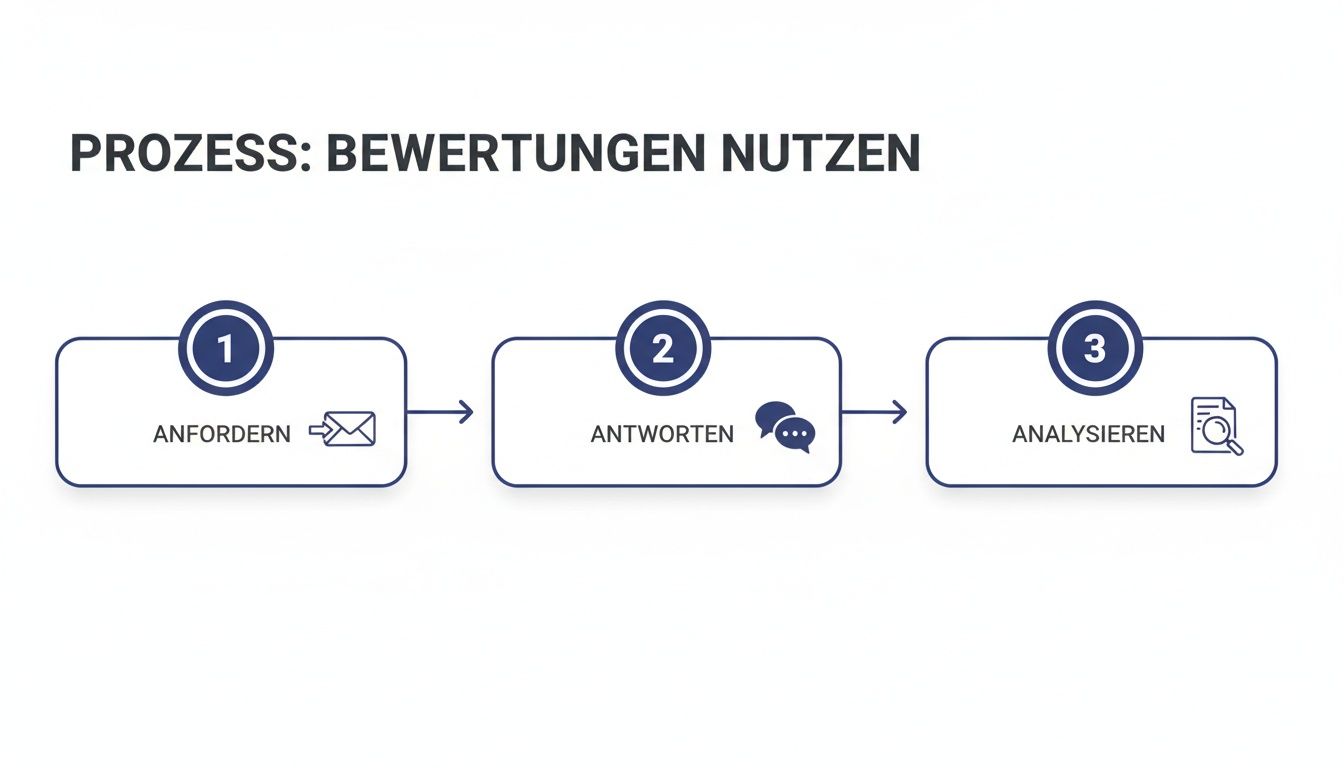
Active reputation management is a cycle that creates trust and gradually increases visibility.
The way to a good position on site is a marathon, not a sprint. What often distinguishes successful companies is persistence in maintaining profiles, particularly when dealing with customer feedback.
Not every company has the resources to provide this intensive care itself. In such cases, working with a specialized service provider can be an effective way to achieve sustainable top rankings and secure a competitive advantage.
Frequently asked questions about Google Maps optimization
Here are answers to some of the most common questions from local business owners about optimizing their Google profile.
How long does it take to see the first results?
The first positive effects, such as more clicks on directions or more calls, can often be seen after just a few weeks, especially after basic adjustments to the profile.
However, a longer period of time is required to permanently establish yourself in the top 3 of the local pack. Competition in your industry and at your location plays a major role in this. Plan for several months of continuous work. Patience and consistency are crucial here.
How much does professional optimization for Google Maps cost?
The costs are individual and depend on the scope of the measures, the competitive density and your goals. A small shop in a rural area has a different starting point than a company in a big city.
Good optimization is often a sustainable investment. While paid ads only work as long as the budget flows, good organic placement can generate consistently qualified customer inquiries over a long period of time.
Can't I just do it myself?
Yes, you can implement the basics yourself. Filling out company information, uploading photos and responding to reviews is a good and feasible start.
The difference to a specialized agency often lies in the details. Experts use analysis tools, study competition and know specific optimization levers that can ultimately make the difference. They can identify potential that you easily overlook yourself and thus often achieve sustainable results more quickly.
Summary and next steps
Strategic Google Maps optimization is essential for local companies to be found online. The most important pillars are a fully completed and accurate company profile, high-quality visual content, active maintenance through contributions and Q&A management, and systematic management of customer reviews. Continuity is the key to success. By working consistently on these areas, you create a strong foundation for your local visibility and can secure a decisive advantage over the competition.
Do you want to improve your local visibility and attract more customers? SocialEdge helps you to sustainably increase your success in Google Maps.
Discover now how we can make your company unbeatable locally!